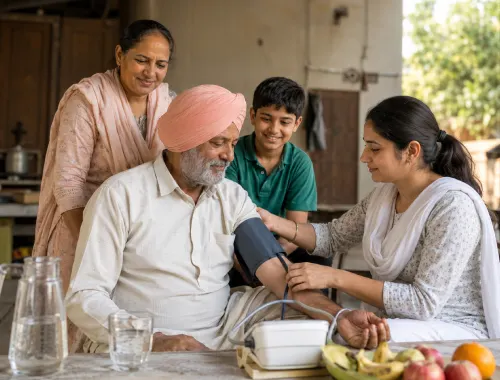
Healthy Blood Pressure Habits for Families
A healthier village begins when families understand that blood pressure is not just a number, but an important sign of long-term stroke safety.
High blood pressure is one of the most important stroke risk factors. Many people feel normal even when their blood pressure is high. This is why regular checking, simple lifestyle habits, and early awareness matter so much, especially in rural communities where people may delay care until symptoms become serious.
Ladda-Stroke Safe Village, also known as Ladda-SSV, encourages rural blood pressure awareness as part of its wider goal to make the Ladda-SSV village network safer from the avoidable harm of stroke.
Why blood pressure awareness matters in village life
In many families, blood pressure is checked only when a person feels unwell. This can miss the real problem. High blood pressure may remain silent for years and still place stress on the brain, heart, kidneys, and blood vessels.
For stroke prevention, awareness must begin before an emergency. A person who understands their blood pressure pattern can speak to a doctor earlier, follow treatment more carefully, and make daily choices that support better health.
This is especially important for older adults, people with diabetes, people with a family history of stroke, and those who have already had a stroke or warning symptoms in the past.
Regular checks make prevention practical
A blood pressure check is simple, quick, and useful. It does not treat the problem by itself, but it helps families know when medical advice may be needed.
Ladda-SSV supports prevention through free blood pressure and blood sugar checks within its village network. Mata Rupinder Clinic in Ladda provides daily evening checks for people who are well enough to walk in independently and sit comfortably. In the wider village network, the team also carries out prevention checks during scheduled village visits, usually at a local gurdwara or community centre.
These checks are for prevention and routine awareness. They are not for very sick, dependent, or emergency patients. Anyone showing sudden stroke signs should not come for a routine check. Acute stroke concerns should begin with the Ladda-SSV helpline.
Blood sugar also matters for stroke safety
Blood pressure and blood sugar are often discussed together because both can affect long-term vascular health. A person with diabetes or uncontrolled sugar levels may have a higher risk of complications affecting the blood vessels.
For families, this means prevention should not focus on one number only. Blood pressure, blood sugar, medication habits, diet, activity, tobacco use, alcohol use, sleep, and regular medical follow-up all matter.
A simple village-level check can help people become more aware, but proper diagnosis and treatment decisions should always remain with qualified medical professionals.
Family habits can support better control
Good health habits are easier when the whole family understands their importance. A person with high blood pressure may struggle to follow advice if the home routine does not support it.
Families can help by keeping meals balanced, reducing excess salt, encouraging daily movement, supporting regular medicine use, and avoiding pressure to stop treatment when the person feels fine. Many people stop medicines because they feel normal, but blood pressure treatment is often needed even when there are no symptoms.
Caregivers can also help older family members maintain a small record of readings, medicine names, and doctor visits. This makes future consultations clearer and more useful.
Food choices should be simple and realistic
Healthy eating does not need to feel complicated. In Punjabi households, small changes can make daily meals more balanced.
Families can reduce extra salt, avoid frequent fried snacks, include more vegetables, choose simpler home-cooked meals, and be mindful of portion size. People who have been advised by a doctor to control blood pressure, sugar, or weight should follow the guidance given for their own condition.
The goal is not to create fear around food. The goal is to make everyday meals more supportive of long-term health.
Movement should fit the person’s ability
Regular movement can support blood pressure control, but it should match the person’s age, health condition, and physical ability. Walking, light household activity, gentle stretching, or doctor-advised exercise can all be useful depending on the person.
People with chest pain, severe breathlessness, recent illness, serious weakness, or other medical concerns should not begin new activity without medical advice. Stroke survivors should follow guided rehabilitation plans rather than trying difficult exercises without supervision.
For many families, the best starting point is consistency. A safe, regular routine is better than sudden, difficult changes that cannot be continued.
Medicine habits need family support
One common challenge in blood pressure care is irregular medicine use. Some people take tablets only when they feel symptoms. Others stop when readings improve. Some forget doses or take medicines from old prescriptions without review.
Families can support better care by encouraging regular follow-up with a doctor, keeping medicines organized, and not changing doses without medical advice. A blood pressure reading is useful, but it must be understood in the right medical context.
Ladda-SSV prevention checks can help people become more aware of their readings, but they do not replace a doctor’s diagnosis, prescription, or ongoing treatment plan.
Prevention is stronger when villages work together
A stroke-safe village is not built only through emergency response. It is also built through prevention. When people regularly check blood pressure and blood sugar, talk openly about risk factors, and support older residents in seeking timely care, the whole community becomes better prepared.
Schools, gurdwaras, panchayats, youth clubs, and local volunteers can all help normalize health awareness. When checking blood pressure becomes a responsible habit rather than a sign of illness, more people can take action early.
This is the spirit behind the Ladda-SSV Model. Prevention is not separate from stroke safety. It is one of the four connected pillars that support the full rural community stroke care pathway.
A small check can start an important conversation
One blood pressure reading may seem small, but it can begin a meaningful conversation about health. It can encourage a person to visit a doctor, restart proper follow-up, improve medicine habits, or take daily prevention more seriously.
For families in the Ladda-SSV village network, prevention services are an opportunity to stay aware before a crisis happens. Regular checks, simple habits, and informed family support can help reduce avoidable risk and strengthen long-term stroke safety.
TheBrownMove Foundation, Ladda, through its flagship Ladda-SSV Model, is working to make stroke prevention more reachable, practical, and community-rooted for village families. For non-emergency prevention support within the Ladda-SSV village network, connect with the team and take the next step toward safer family health.