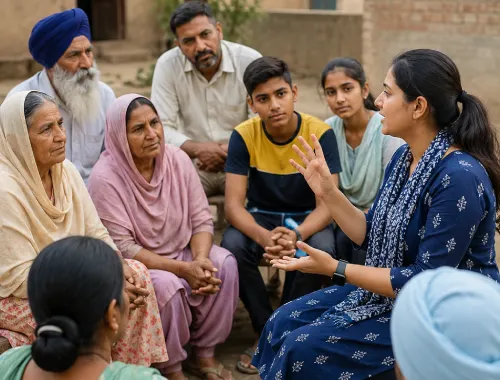
How Villages Can Recognize Stroke Early
A stroke can change a family’s life within minutes, but early recognition can help a village respond with greater confidence and less confusion.
In many rural communities, the first people near a stroke patient are not doctors. They are family members, neighbours, students, teachers, shopkeepers, gurdwara sevadars, panchayat members, or local volunteers. This is why village stroke recognition matters. When ordinary people know the warning signs and understand what to do first, they can help the patient reach the right pathway sooner.
Ladda-Stroke Safe Village, also known as Ladda-SSV, is built around this simple but important idea: a stroke-safe village begins with awareness, calm action, and a clear response system.
Why early stroke recognition matters
Stroke is a medical emergency. It happens when blood flow to the brain is blocked or when bleeding occurs inside or around the brain. The signs can appear suddenly, and the patient may not always understand what is happening.
In a village setting, time can be lost for many reasons. Families may wait to see if the person improves. They may think the symptoms are due to weakness, age, tiredness, or low sugar. Some may first try home remedies or take the patient to a place that is not prepared for stroke care.
These delays can affect what treatment options remain available. Recognizing stroke early does not mean diagnosing the patient at home. It means noticing warning signs quickly and making the right first call.
Common signs a village should notice
Stroke symptoms usually appear suddenly. A person may look normal a few minutes earlier and then show a clear change.
A simple way to remember some warning signs is FAST:
Face: One side of the face may droop, or the smile may look uneven.
Arm: One arm may become weak, heavy, or difficult to lift.
Speech: Speech may become unclear, confused, or difficult to understand.
Time: If these signs appear, it is time to seek urgent help.
Other signs can also matter. Sudden weakness on one side of the body, sudden loss of balance, sudden vision difficulty, severe unexplained headache, confusion, or difficulty speaking should be taken seriously.
The safest approach is simple: when a sudden neurological change is noticed, do not wait at home to see what happens.
What families should do first
For families in the Ladda-SSV village network, acute stroke support begins with a phone call to the Ladda-SSV helpline.
The patient should not be brought directly to Mata Rupinder Clinic or the Ladda hub for an acute stroke situation. Ladda-SSV is not a walk-in emergency centre. The helpline is the starting point because the team needs to understand the situation, guide the next step, and activate the correct pathway when the case fits the suspected-stroke criteria.
When calling, speak clearly and explain what has happened. Share the patient’s village, age, symptoms, and when the symptoms were first noticed. If helpful, begin with: “Hello, Ladda SSV,” and then explain the concern.
This phone-first process helps the team assess the situation and decide whether the suspected stroke pathway applies.
The role of students and village awareness
One important part of the Ladda-SSV Model is community stroke recognition through schools and village-level education. Students, especially from Classes 6 to 12, can become an important awareness link between the school, household, and wider community.
This does not make students medical workers. Their role is awareness and reporting. When students learn the warning signs of stroke and understand the importance of the helpline, that knowledge can travel into families and neighbourhoods.
In rural life, children often observe changes in grandparents, parents, neighbours, and relatives. A trained student may remember that sudden face drooping, arm weakness, or speech difficulty should not be ignored. That small piece of knowledge can help a family act sooner.
Why villages need a shared response mindset
Stroke does not affect only one person. It affects the whole household. A survivor may need transport, hospital care, rehabilitation, emotional support, and long-term family involvement. Caregivers may have to change their daily routines. Income, mobility, dignity, and independence can all be affected.
This is why village stroke safety cannot depend on one person alone. A safer village needs shared understanding. Families should know the warning signs. Local drivers should understand their role when activated. Volunteers should support awareness. Schools, gurdwaras, youth clubs, and panchayats can help spread clear information.
The goal is not panic. The goal is calm, informed action.
What not to do during a suspected stroke
During a suspected stroke, delays can happen when people try too many things before seeking proper help. Families should avoid waiting for symptoms to settle on their own. They should avoid treating sudden weakness or speech difficulty as a routine issue without guidance. They should not move the patient through the Ladda-SSV pathway without first calling the helpline.
It is also important to understand the scope of Ladda-SSV support. The acute pathway is stroke-only and helpline-based. It is not for accidents, heart attacks, or other emergencies. Free transport support applies only to eligible suspected stroke cases that are assessed and approved through the Ladda-SSV process. Hospital charges are not covered by the foundation.
Clear understanding protects families from confusion at the most stressful moment.
How Ladda-SSV supports village stroke recognition
Ladda-SSV is a flagship initiative of TheBrownMove Foundation, Ladda. It is designed as a rural community stroke care system for the Ladda-SSV village network.
The model works through four connected pillars: Surveillance, Prevention, Acute Care, and Rehabilitation. Stroke recognition belongs most closely to Surveillance, but it also supports the full pathway. When a stroke is identified early, the acute response can begin sooner. When families understand risk factors, prevention becomes stronger. When survivors are known to the system, rehabilitation support can continue in a more structured way.
This is what makes Ladda-SSV different from a one-time awareness campaign. It is designed as a village-level system, rooted in local participation and guided by clinical oversight.
A stroke-safe village starts with simple knowledge
A stroke-safe village does not mean every stroke can be prevented or every outcome can be controlled. It means the village is better prepared. People know what to notice. Families know where to call. Local systems are more organized. Survivors are not forgotten after the emergency has passed.
For families in the Ladda-SSV village network, the most important step is to keep the helpline process in mind and act quickly when sudden stroke signs appear.
When a village learns to recognize stroke early, it becomes more prepared to protect its people with dignity, urgency, and care.