Ladda-SSV School Awareness
School Stroke Awareness
Ladda-SSV works with schools to help students understand stroke warning signs, the value of early action, and the importance of guiding families toward the helpline pathway within the Ladda-SSV village network.
Students are not trained as medical responders.
Their role is awareness, recognition, and safe reporting to responsible adults so families can seek the right help without delay.
Why schools matter
Schools Can Carry Stroke Awareness Into Homes
Schools are trusted spaces in village life. When students learn the warning signs of stroke in a simple and responsible way, that knowledge can reach families, neighbours, and community spaces where early recognition matters.
Trusted village spaces
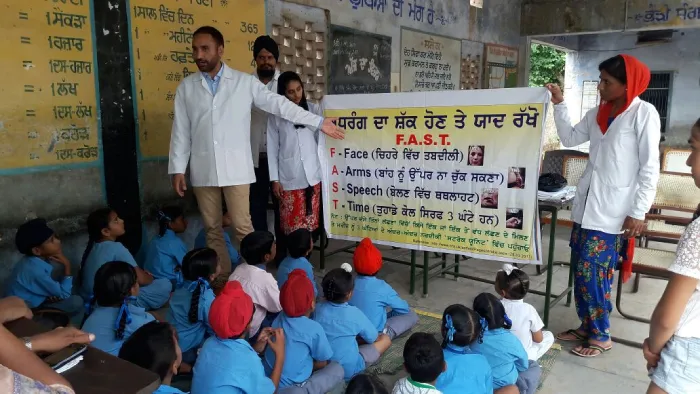
School awareness activity reaches young people in a familiar setting where learning can be clear, calm, and structured.
Awareness beyond the classroom
Students often share what they learn with parents, grandparents, and neighbours, helping stroke awareness move into daily village life.
A safer first response
The focus is not treatment by students. The focus is helping families recognize danger and move toward the helpline pathway.
What students learn
Simple Knowledge That Supports Safer Action
School stroke awareness is designed for students, especially Classes 6 to 12, with careful language that supports recognition without placing medical responsibility on children.
Stroke warning signs
Students learn that sudden changes such as face drooping, arm weakness, or speech difficulty can be warning signs that need urgent adult attention.
Why symptoms should not be ignored
The training helps students understand that possible stroke symptoms should be taken seriously and shared with a responsible adult quickly.
Speaking to an adult
Students are guided to tell a parent, teacher, neighbour, or another responsible adult when they notice possible warning signs.
Using the helpline pathway
Students learn that suspected stroke within the Ladda-SSV model should move through the helpline pathway, not through direct arrival at the clinic or hub.
Awareness at home
The learning is meant to support family awareness, especially where older adults or caregivers may benefit from a clearer understanding of stroke signs.
What students should not do
Students are not asked to diagnose, treat, move, or manage a patient. Their safe role is to recognize, inform, and involve adults.
Student safety and responsibility
A Safe Awareness Role, Not a Medical Role
Ladda-SSV school awareness protects students by keeping their role clear. Children and young people can support awareness, but emergency decisions must remain with responsible adults and trained professionals.
Students do not diagnose
The training does not ask students to decide whether someone has had a stroke.
Students do not treat
Students are not expected to give treatment, move a patient, or manage an emergency.
Students help adults act
Their role is to remember warning signs, speak to responsible adults, and support safer awareness in their surroundings.
School awareness visits
How the Awareness Sessions Work
Within the Ladda-SSV village network, school awareness activity forms part of the Surveillance pillar. The sessions are designed to be practical, age-appropriate, and focused on recognition and safe reporting.
Connect with the school
The Ladda-SSV team coordinates awareness activity with local school settings in the village network.
Teach clear warning signs
Students learn simple recognition points and the importance of telling an adult when possible stroke signs are noticed.
Strengthen family awareness
The aim is to help stroke knowledge travel from the classroom into homes and community life.
From classroom to village
Learning That Supports Stroke-Safe Villages
School awareness is one part of a wider village-level approach. It helps young people understand stroke and supports the larger Ladda-SSV goal of making villages safer from avoidable harm.
Home awareness
Students can help families remember that sudden stroke warning signs should be taken seriously.
Community recognition
Awareness can move through classrooms, homes, streets, farms, and village gathering places.
Helpline-first action
Families are guided toward the helpline pathway for suspected stroke within the Ladda-SSV model.
School Stroke Awareness FAQs
These answers explain the student role clearly and keep school awareness focused on recognition, reporting, and safe community action.
Are students expected to treat stroke patients?
No. Students are not expected to treat, diagnose, move, or manage a patient. Their role is to recognize possible warning signs, tell a responsible adult, and support awareness.
Which students are included in school awareness activity?
The school awareness work is focused especially on students in Classes 6 to 12, using simple and responsible learning suited to their role in the community.
What should a student do after noticing possible stroke warning signs?
A student should tell a responsible adult immediately. The adult can then seek help through the appropriate Ladda-SSV helpline pathway for suspected stroke within the village network.
Is school stroke awareness available outside the Ladda-SSV village network?
Current Ladda-SSV support is focused on the Ladda-SSV village network. Schools and local institutions within the network can contact the team for awareness-related coordination.
Is this a replacement for emergency medical care?
No. School awareness is not a substitute for emergency medical care. It helps families recognize possible stroke signs and move toward the correct helpline-based response pathway.