Ladda-SSV Stroke Support
Stroke Helpline
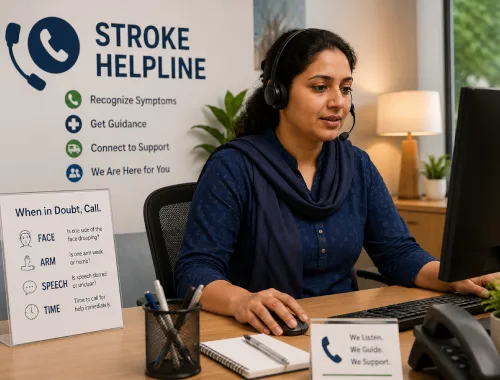
If someone in the Ladda-SSV village network shows possible stroke symptoms, begin with a helpline call. The Stroke Helpline is the first step for phone-based guidance, assessment, and the next action through the Ladda-SSV pathway.
Stroke Helpline Number
Call First. Do Not Bring Acute Stroke Patients Directly to the Clinic.
Mata Rupinder Clinic is not a walk-in emergency centre for acute suspected stroke. Please call the Stroke Helpline first so the Ladda-SSV team can guide the next step through the correct pathway.
Punjabi-speaking callers are welcome. You may call and say, “Hello, Ladda SSV,” then explain your concern.
Recognize Possible Stroke
When Should You Call?
Call the Stroke Helpline when someone in the Ladda-SSV village network shows sudden signs that may suggest stroke. Do not wait to see if the symptoms settle.
1
Face Drooping
One side of the face looks weak, uneven, or droops suddenly.
2
Arm Weakness
One arm feels weak, drops down, or cannot be lifted normally.
3
Speech Difficulty
Speech becomes unclear, confused, or difficult to understand.
4
Sudden Confusion
The person suddenly seems confused, unaware, or unable to respond properly.
5
Sudden Weakness
Sudden weakness or numbness appears on one side of the body.
6
Loss of Balance
The person suddenly loses balance, coordination, or walking ability.
Phone-First Pathway
What Happens After the Call
The helpline helps the team understand the situation and guide the caller through the Ladda-SSV pathway. Transport support is not automatic. It depends on assessment and eligibility.
1
You Call
A caller contacts the Stroke Helpline and explains the concern.
2
Details Are Shared
The caller shares the patient’s symptoms, village, and when symptoms started.
3
Phone Assessment Begins
The situation is assessed by phone through the Ladda-SSV pathway.
4
Video Assessment May Follow
A Ladda-SSV team member may join a video assessment if needed.
5
Next Step Is Guided
Eligible suspected stroke cases may be guided into the transport pathway.
Before You Call
What to Tell the Helpline Team
Clear information helps the team understand the situation quickly. Share what you know, even if every detail is not available.
✓
Patient’s village or current location
✓
Symptoms noticed by family or nearby people
✓
Time when symptoms first started
✓
Current condition of the patient
✓
Patient’s age, if known
✓
A reachable phone number for follow-up
Important Guidance
Important Safety Notes
These points protect patients and families from delays, confusion, or wrong expectations during an urgent situation.
Stroke-Only Support
The Stroke Helpline is for suspected stroke support. It is not for accidents, heart attacks, or general emergencies.
Call Before Coming
Do not bring acute suspected stroke patients directly to Mata Rupinder Clinic or the Ladda hub. Call first.
Hospital Charges Not Covered
The foundation supports eligible transport through the pathway, but hospital charges are not paid by the foundation.
Current Service Boundary
Support Within the Ladda-SSV Village Network
At present, helpline-linked support is available only within the Ladda-SSV village network. A family member, caregiver, neighbour, teacher, student, volunteer, or responsible person near the patient may call.
Related Service Pathways
After Helpline Assessment
The Stroke Helpline connects urgent suspected stroke concerns to the correct next step. Other Ladda-SSV services support prevention and recovery through separate pathways.
Emergency Transport Support
Eligible suspected stroke cases may be guided into transport support after helpline assessment.
Prevention Services
BP and blood sugar checks support non-emergency prevention work across the Ladda-SSV pathway.
Rehabilitation & Tele-Rehab
Appointment-based stroke recovery support is available for registered stroke patients.
Questions & Answers
Stroke Helpline FAQs
These answers explain the helpline pathway, service boundary, and important safety limits.
Call when someone in the Ladda-SSV village network shows possible stroke symptoms such as face drooping, arm weakness, speech difficulty, sudden confusion, sudden weakness, or sudden loss of balance.
No. Acute suspected stroke cases should begin with a helpline call. Mata Rupinder Clinic is not a walk-in emergency centre for acute stroke.
No. The helpline is for suspected stroke support within the Ladda-SSV pathway. It is not for accidents, heart attacks, or other general emergencies.
A family member, caregiver, neighbour, teacher, student, volunteer, or any responsible person near the patient may call.
Share the patient’s village, symptoms, when the symptoms started, current condition, age if known, and a phone number where the caller can be reached.
No. Transport support is arranged only for eligible suspected stroke cases after assessment through the Ladda-SSV pathway.
No. The foundation provides free community services and free transport support for eligible suspected stroke cases through the pathway, but hospital charges are not covered.
Yes. Callers may speak in Punjabi and explain the concern in simple words.
At present, support is available only within the Ladda-SSV village network.
Suspected Stroke Support
Need Help for Suspected Stroke? Call First.
For acute suspected stroke within the Ladda-SSV village network, begin with the Stroke Helpline call. Do not bring the patient directly to Mata Rupinder Clinic without calling first.