Ladda-SSV recovery support

Stroke Rehabilitation & Tele-Rehab

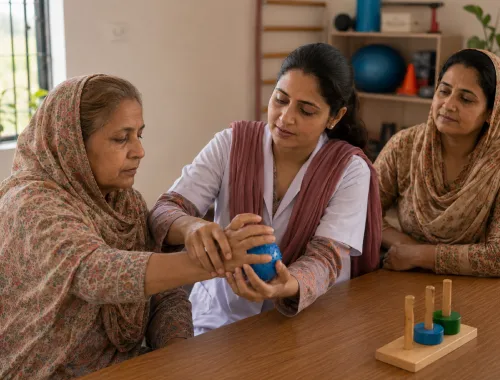
Ladda-SSV supports stroke recovery through appointment-based rehabilitation at Mata Rupinder Clinic and daily tele-rehabilitation through video call for eligible stroke patients in the Ladda-SSV village network.

Rehabilitation is for planned recovery support. Sudden stroke symptoms should begin with the Ladda-SSV helpline pathway.
Stroke Rehabilitation Tele Rehab

Support After Survival

Stroke care does not end after the first emergency stage. Many families need steady guidance, repeated practice, and a clear recovery routine. Ladda-SSV helps make that recovery pathway more organized for stroke patients and caregivers.

Continued Practice

Recovery often depends on regular guided activity over time. The rehabilitation pathway supports planned practice rather than one-time advice.

Family Guidance

Caregivers play an important role in daily recovery. The service helps families understand how to continue support safely at home.

Structured Follow-Up

Appointment-based clinic care and video-based support help patients stay connected with the Ladda-SSV rehabilitation pathway.

Two connected routes

Clinic-Based and Video-Based Care

Rehabilitation support is offered through Mata Rupinder Clinic and through daily tele-rehabilitation. Both routes are designed for planned stroke recovery, not emergency walk-in care.

At Mata Rupinder Clinic

In-person rehabilitation is appointment-based and focused on registered stroke patients who come according to assigned times.
Daily eight-hour rehabilitation availability
Stroke-focused recovery support
Planned visits for registered patients

Through Video Call

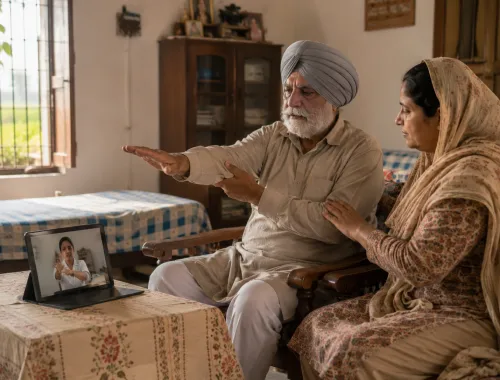
Tele-rehabilitation helps families continue guided recovery support from home where it is suitable for the patient.
Daily eight-hour tele-rehabilitation availability
Video-based recovery guidance
Support for home-based continuity
Appointment Based Stroke Rehab

Mata Rupinder Clinic

Appointment-Based Stroke Rehab

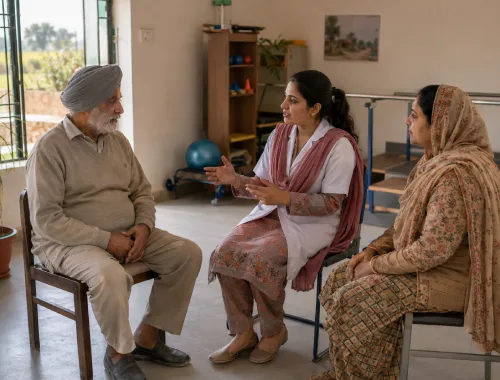
Mata Rupinder Clinic supports the rehabilitation pillar of the Ladda-SSV Model. Rehabilitation is arranged for registered stroke patients and is not an open emergency walk-in service.
For registered stroke patients needing planned recovery support
Visits are arranged by appointment and assigned timing
Daily eight-hour rehabilitation availability
Focused on stroke recovery, not general neurological care

Tele-rehabilitation

Daily Recovery Support Through Video Call

Tele-rehabilitation allows stroke patients and caregivers to stay connected with recovery support from home. It is designed to improve continuity when in-person visits are not the only practical route.
Daily eight-hour video-based support
Useful for guided home practice and caregiver involvement
Upper-limb rehabilitation support is available through the tele-rehab system

Careful service note

Tele-rehabilitation is available, but it should not be understood as a fully developed system for every rehabilitation need. Broader lower-limb functions are still under development through the relevant clinical development pathway.

Rehabilitation methods

Therapies Used in the Rehab Pathway

Ladda-SSV uses confirmed stroke rehabilitation methods as part of a guided recovery pathway. These supports are offered without promising fixed or guaranteed recovery outcomes.

Neuroplasticity-Based Rehabilitation

Guided rehabilitation practice is used to support the brain and body as patients work on recovery after stroke.

Mirror Therapy

Mirror therapy may be used as part of stroke recovery support, especially where guided movement practice is suitable.

Soft Robotic Glove-Based Therapy

Glove-based therapy supports guided hand and upper-limb rehabilitation where appropriate for the patient.

TENS

TENS may be included as part of the rehabilitation approach when it fits the patient’s recovery plan.

Tele-Rehabilitation

Video-based sessions help continue recovery support at home and keep families connected with the rehab pathway.

Who can use this support

Who This Support Is For

Rehabilitation and tele-rehabilitation are intended for stroke patients connected with the Ladda-SSV pathway and village network. The service is focused on planned recovery support after stroke.

Stroke Survivors

People recovering after stroke may receive guided support through clinic-based or video-based care where suitable.

Family Caregivers

Families supporting recovery at home can receive practical guidance through the rehabilitation pathway.

Registered Patients

Appointment-based rehabilitation is arranged for registered stroke patients according to assigned times and recovery needs.

Important service boundaries

What This Service Is Not

Clear boundaries help families choose the right pathway at the right time. Rehabilitation support is different from emergency stroke response.

It is not an emergency walk-in centre.
It is not a general neuro-rehabilitation clinic for every condition.
It is not a replacement for hospital treatment, and hospital charges are not covered by the foundation.
Sudden stroke symptoms should begin with the helpline pathway, not a direct visit to the clinic.

How families can begin

Starting Rehabilitation Support

Families can contact Ladda-SSV for planned stroke recovery guidance. The team can help direct the next step where rehabilitation or tele-rehabilitation is suitable.

1

Contact Ladda-SSV

Reach out through the available contact route for rehabilitation guidance.

2

Share the Recovery Concern

Explain the patient’s stroke recovery needs so the team can understand the concern clearly.

3

Follow the Advised Pathway

Where suitable, an appointment-based or video-based rehabilitation route can be guided.

Common questions

Rehabilitation & Tele-Rehab FAQs

These answers explain the scope, access, and safety boundaries of Ladda-SSV rehabilitation support.

No. Rehabilitation is appointment-based stroke recovery support for registered stroke patients. It is not a general walk-in service.
No. Sudden stroke symptoms should begin with the Ladda-SSV helpline pathway. Rehabilitation is for planned recovery support, not emergency assessment.
Yes. Daily tele-rehabilitation is available for eight hours. Exact clock-based timings should be confirmed through the Ladda-SSV contact route.
The confirmed rehabilitation supports include neuroplasticity-based rehabilitation, mirror therapy, soft robotic glove-based therapy, TENS, and tele-rehabilitation.
Tele-rehabilitation is available, including upper-limb rehabilitation support. It should not be presented as fully developed for every lower-limb rehabilitation function at this stage.
Rehabilitation and tele-rehabilitation are described as free Ladda-SSV services. This does not mean that hospital charges are covered by the foundation.
No. This service is focused on stroke rehabilitation and tele-rehabilitation. It should not be understood as a broad physiotherapy clinic for all conditions.

Planned stroke recovery support

Need Stroke Recovery Support?

Contact Ladda-SSV to ask about rehabilitation or tele-rehabilitation guidance for a stroke patient in the village network.

For sudden stroke symptoms, use the helpline pathway first. Do not bring an acute stroke patient directly to the clinic without calling.

error: Content is protected !!
//
Ladda-SSV team can guide general enquiries, services, village support, and volunteering. For urgent stroke symptoms, call the helpline.
👋 Hi, how can I help?