The Ladda-SSV Model
A village-level stroke care pathway designed to help rural communities recognize, respond, and recover with better coordination.
Ladda-Stroke Safe Village, known as Ladda-SSV, is the flagship initiative of TheBrownMove Foundation, Ladda. It brings community awareness, risk prevention, helpline-based response, and stroke recovery support into one connected rural model.
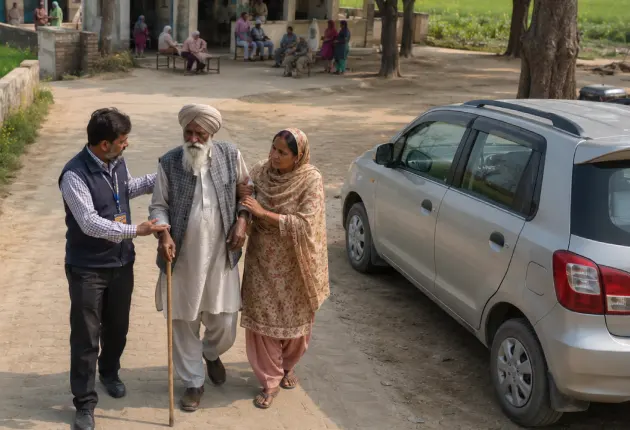
For suspected acute stroke, the first step is to follow the helpline-first pathway. Mata Rupinder Clinic is not a walk-in emergency centre.
A Village-Level System, Not A Standalone Service
Ladda-SSV is designed as a structured rural stroke care model. It connects people, places, and response steps so that village communities can become better prepared before stroke happens, during a suspected stroke, and through recovery after stroke.
Not Only Awareness
Awareness is important, but the model also connects prevention, response guidance, and recovery support.
Not Only A Clinic
The model is wider than one location. It works through village institutions, local participation, and coordinated support.
Not Only Transport
Transport support is one part of a larger stroke-focused pathway built around recognition, assessment, and continuity of care.
A Connected Stroke Care Model For Village Life
The model is stroke-focused. It is built for rural communities where delay, confusion, misinformation, transport barriers, and limited rehabilitation access can make stroke harder for families to manage.
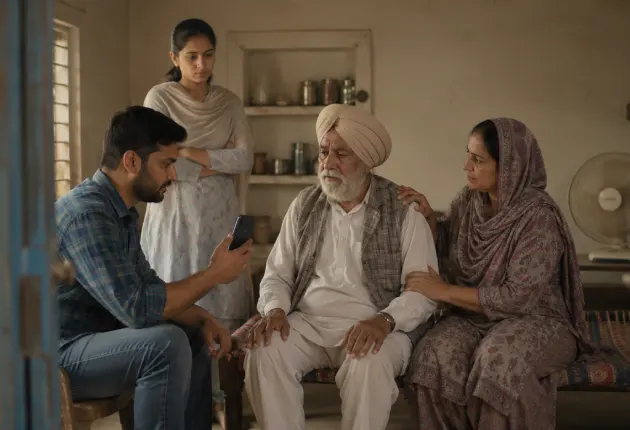
Built Around The Real Gaps Families Face
In rural life, stroke often creates more than a medical emergency. Families may not recognize warning signs early. They may not know whom to call. Transport decisions can become stressful. Recovery can continue for months, with caregivers carrying much of the burden at home.
Ladda-SSV was created to bring order to this journey. The model gives communities a clearer pathway for awareness, prevention, response, and recovery, while staying rooted in village life.
Rooted In Ladda, Connected Through The Village Network
The model follows a hub-and-spoke approach. Village Ladda acts as the central community hub for coordination, prevention support, rehabilitation planning, and model activity. The surrounding Ladda-SSV village network connects through schools, gurdwaras, community spaces, volunteers, trained local support, and family participation.
This structure keeps the model close to the people it serves. It allows stroke care awareness and support to move through familiar village institutions instead of depending only on distant systems.
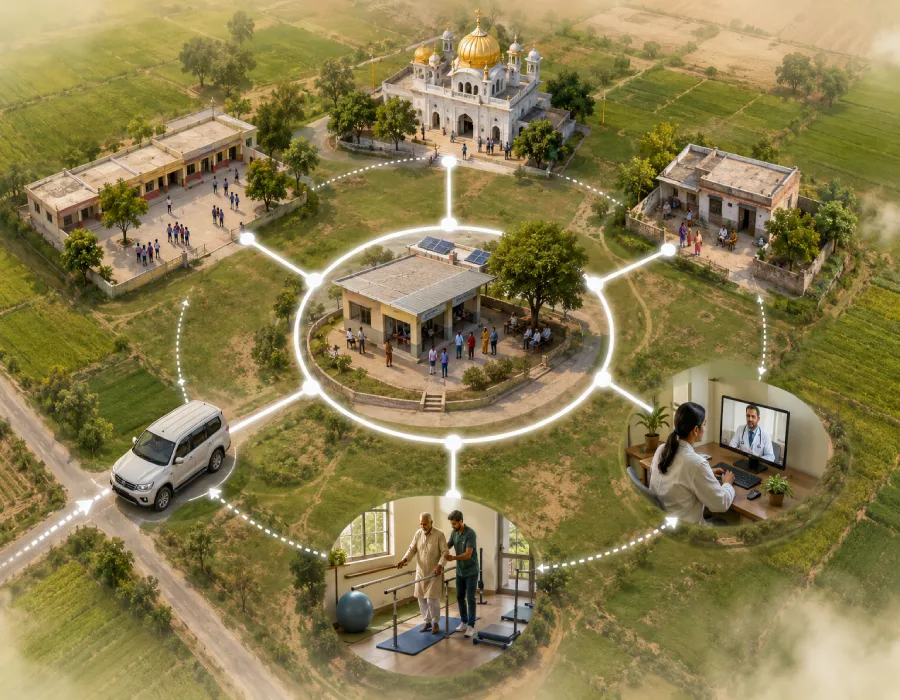
One Pathway Across The Stroke Journey
The strength of Ladda-SSV is its connected pathway. It supports the village before a stroke, guides families during suspected stroke, and continues support after survival.
Prepare
Villages become more aware of stroke signs, risk factors, and the importance of early action.
Recognize
Students, families, and community members are guided to understand when stroke may be suspected.
Respond
Suspected stroke support begins through the helpline-first pathway, reducing confusion during urgent moments.
Connect
Eligible suspected stroke cases can be guided toward the appropriate stroke care pathway through organized coordination.
Recover
Stroke survivors can continue recovery through planned rehabilitation and tele-rehabilitation support.
Four Pillars Working Together
The Ladda-SSV Model is built on four connected pillars: Surveillance, Prevention, Acute Care, and Rehabilitation. Each pillar has its own role, but the model works best when all four are understood as one system.
Surveillance
Helps the community notice and report stroke-related concerns earlier.
Prevention
Supports regular risk awareness and basic checks within the village setting.
Acute Care
Gives families a helpline-first pathway for suspected stroke situations.
Rehabilitation
Supports continued recovery after stroke through planned care.
Designed For How Rural Families Live, Decide, And Recover
Ladda-SSV is shaped around village reality. It brings together local trust, community institutions, trained support, clinical guidance, and simple response steps.
Community-Rooted
Built around village institutions, families, students, and local support.
Stroke-Focused
Focused on stroke recognition, prevention, response, and recovery.
Pathway-Based
Designed as a connected journey, not a set of disconnected activities.
Clinically Guided
Developed with mentorship, clinical oversight, and academic discipline.
Local Roots With Clinical Guidance
The model is carried forward by TheBrownMove Foundation, Ladda, with guidance from experienced stroke specialists and academic leadership. Its strength comes from combining village-level understanding with a careful, clinically informed approach to rural stroke care.
Ladda-SSV remains a community service model with a separate evidence-building research arm. This distinction keeps public service work practical while allowing the model to be studied responsibly.
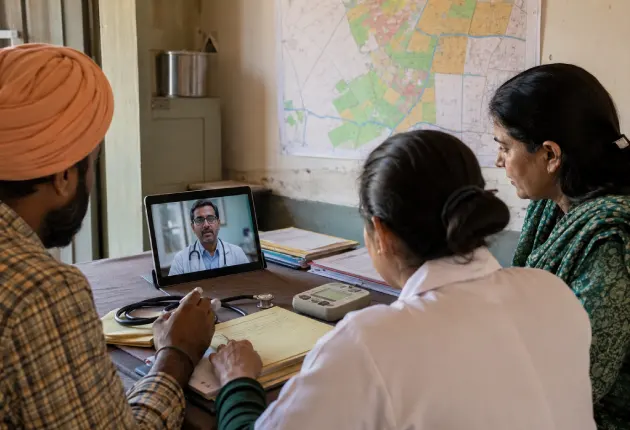
Clear Scope Helps Families Use The Model Correctly
Ladda-SSV is a stroke-focused village model for the Ladda-SSV village network. It should not be understood as a hospital, a general emergency service, or a general ambulance service.
Stroke-Focused
The model is created for stroke awareness, response guidance, and recovery support.
Helpline-First
For suspected acute stroke, families should follow the helpline-first pathway.
Pathway-Guided
For non-urgent prevention and recovery needs, the relevant support pathway can guide families forward.
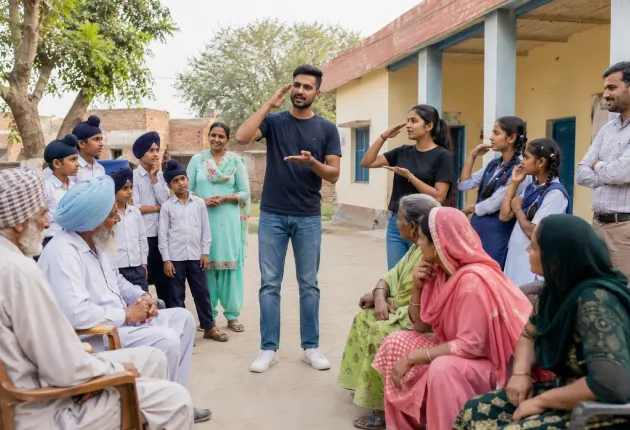
A Stroke-Safe Village Needs Community Participation
A village becomes safer from stroke when people know the signs, families understand the pathway, institutions support awareness, and volunteers help the message reach more homes.
Ladda-SSV works with schools, gurdwaras, panchayats, youth groups, caregivers, and community members who want to support stroke-safe village life.
Understand The Model. Know The Pathway. Support The Mission.
The Ladda-SSV Model is built so rural families do not have to face stroke with confusion and delay. Learn how the model works, understand the village network, and help more people know the right pathway before stroke happens.
Questions About The Ladda-SSV Model
These answers explain the model at a high level and help families, volunteers, and community members understand its purpose.
Ladda-SSV is a rural community stroke care model created by TheBrownMove Foundation, Ladda. It connects awareness, prevention, helpline-based response, and recovery support into one organized village-level pathway.
It is called a stroke-safe village model because it helps communities become better prepared for stroke. The goal is to improve recognition, early action, prevention awareness, and recovery support within village life.
No. Awareness is one part of the model. Ladda-SSV also includes prevention support, helpline-based response guidance, transport coordination for eligible suspected stroke cases, rehabilitation, and tele-rehabilitation.
No. Ladda-SSV is not a hospital. It is a stroke-focused rural community care model that helps families understand and use the right pathway for stroke awareness, response, and recovery.
Village Ladda functions as the central hub for coordination and support. The surrounding village network connects through schools, community spaces, gurdwaras, volunteers, and local participation.
The model is for stroke patients, survivors, caregivers, families, students, teachers, volunteers, village institutions, and community members connected to the Ladda-SSV village network.
The model is designed around village reality. It brings together local community trust, stroke-focused pathways, clinical guidance, and organized support before, during, and after stroke.
Community members can support the model by learning stroke signs, sharing awareness, guiding families toward the right pathway, supporting village activities, and volunteering with Ladda-SSV.