Our Story
A Story Rooted in Ladda
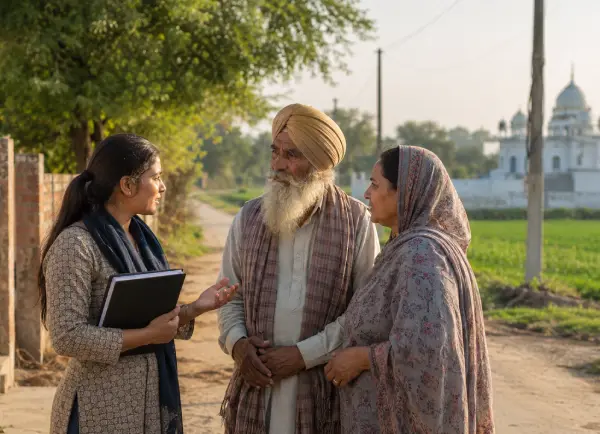
Ladda-SSV began with a serious village concern: too many families were facing stroke with delayed recognition, uncertainty, limited transport support, and little access to continued rehabilitation.
From that concern grew a community-rooted effort to make stroke response more organized, more understandable, and more reachable for the Ladda-SSV village network.
Recognition Was Often Delayed
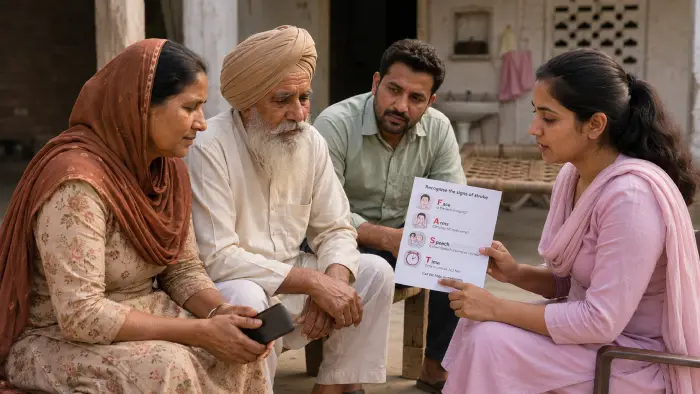
Families may not immediately recognize stroke warning signs or understand why early action matters. Clear village-level awareness became an important starting point.
Response Needed Coordination
In urgent moments, families need a clear pathway instead of confusion. Ladda-SSV was planned as a phone-first, stroke-focused system for the village network.
Recovery Needed Continuity
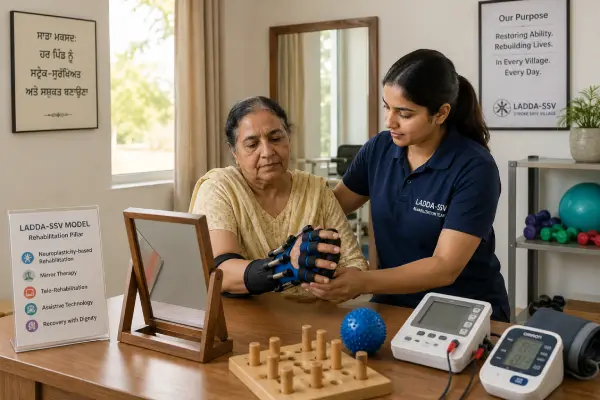
Stroke does not end after the emergency. Survivors and families often need continued rehabilitation guidance and support closer to village life.
Why It Began
Why Villages Needed a Stroke-Safe Pathway
Stroke care in rural life is affected not only by treatment access, but also by recognition, timing, communication, transport, and recovery support. Ladda-SSV was shaped around these practical gaps.
Personal Roots
From Lived Experience to Public Purpose
The idea behind this work was shaped by lived family experience with long-term neurological and rehabilitation needs. That experience gave the mission a personal foundation, but the purpose soon became wider than one household.
It became a commitment to help village families recognize stroke earlier, respond with more clarity, and continue recovery with structured support where possible.
A Grounded Beginning
Mata Rupinder Clinic grew from this same personal and village-rooted concern. Within the Ladda-SSV Model, it supports prevention and stroke rehabilitation, while urgent stroke concerns remain helpline-based.
The Path
A Gradual Path Toward Ladda-SSV
The model did not begin as a generic health project. It grew through a focused concern for rural stroke care and the need for a practical village-level pathway.
A Long-Standing Concern
Stroke in village life showed the need for better information, faster recognition, and more organized access to care.
A Community Response
The idea moved toward a village network approach, where families, students, local institutions, and trained support could all have a role.
A Structured Model
Ladda-SSV took shape as a focused rural stroke care model built around recognition, prevention, acute response, and rehabilitation.
Launch
Launched with Village Roots
TheBrownMove Foundation, Ladda and its flagship Ladda-SSV Model were formally launched on 23 May 2026 through linked moments in Village Ladda and Dhuri.
Rooted in Village Ladda
The morning launch carried the meaning of a local beginning, connecting the foundation’s identity with the village where the work is rooted.
Presented as a Stroke-Safe Model
The Dhuri launch introduced Ladda-SSV as a structured rural stroke initiative guided by community need, clinical mentorship, and serious public purpose.
What It Became
A Story Built into Four Pillars
The story became a practical model for stroke-safe villages. Ladda-SSV brings together four connected pillars so that awareness, prevention, urgent response, and recovery are not treated as separate problems.
Surveillance
Helping the community recognize and report stroke-related concerns through trained local awareness.
Prevention
Supporting regular blood pressure and blood sugar checks through the Ladda-SSV pathway.
Acute Care
Creating a phone-first, stroke-focused pathway for eligible suspected stroke cases in the village network.
Rehabilitation
Supporting appointment-based stroke rehabilitation and tele-rehabilitation for registered patients.